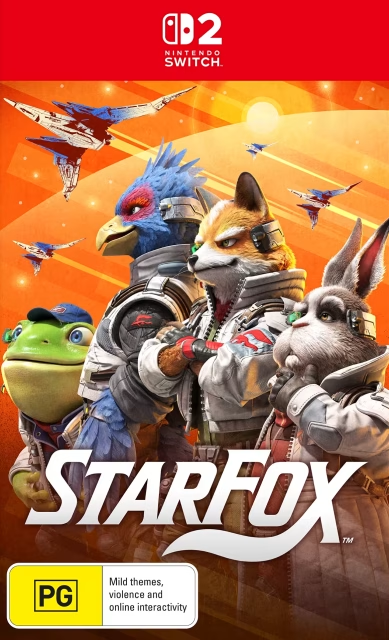
Star Fox
BEE-ABGWA-AUS
Video Game Collection
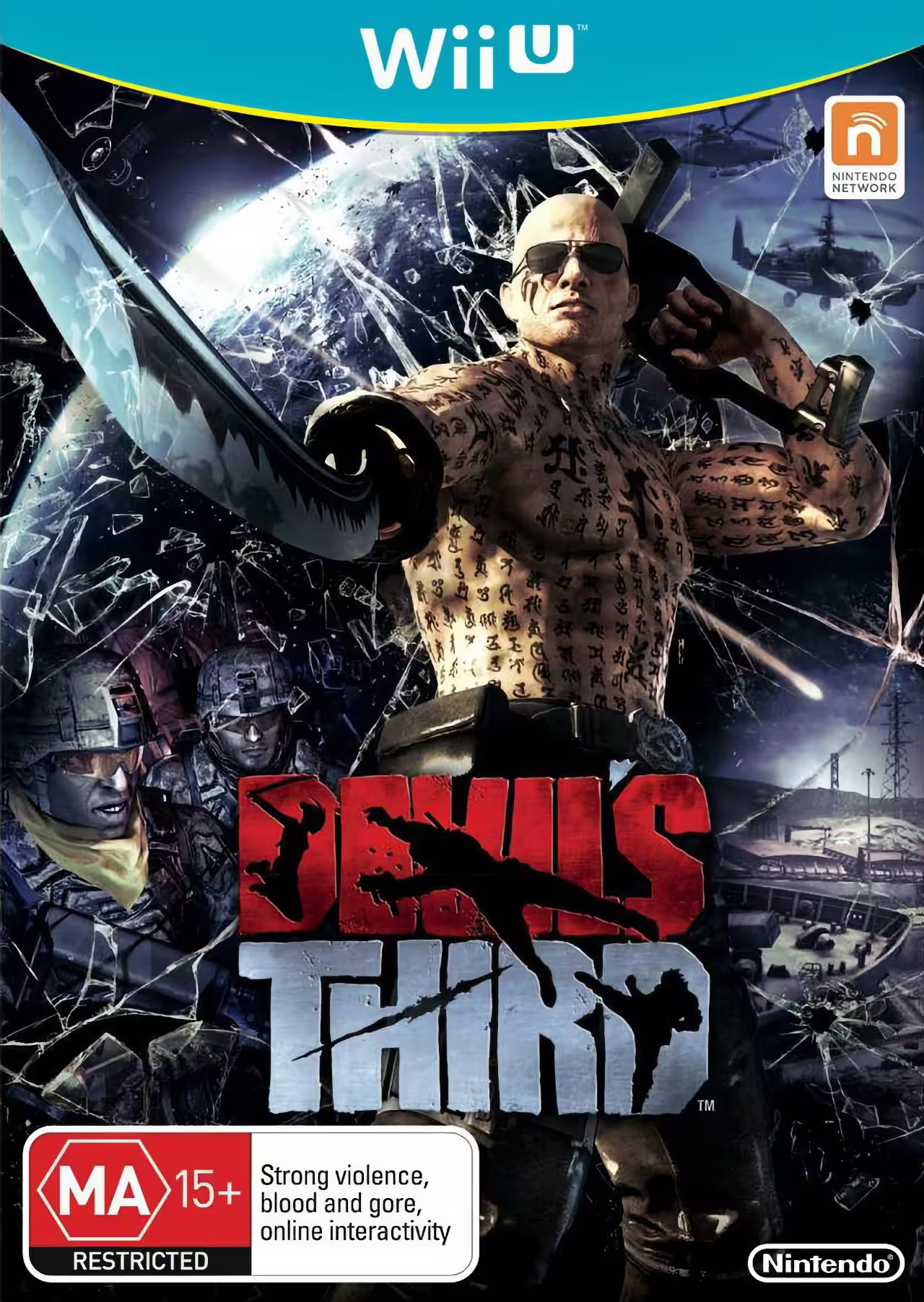
A third-person action game that combines first-person gunplay with close-range sword, axe, and blunt weapon combat. Its unruly mixture of military shooting, violent melee attacks, and large-scale online clan warfare gives it a unique place in the Wii U catalogue, despite serious technical and design flaws.
Devil’s Third follows Ivan, a heavily tattooed former mercenary whose imprisonment ends when a chain of falling satellites destroys much of the world’s communications and military infrastructure. Recruited to hunt his former comrades in the terrorist organisation known as the School of Democracy, Ivan fights through prisons, cities, war zones, and fortified compounds to prevent further attacks. The story is delivered with the broad confidence of an 80s action film, building its identity around betrayal, military bravado, and a protagonist who answers global catastrophe with drums, dry humour, and overwhelming violence.
The camera follows Ivan from behind during movement and melee combat, then switches to first person whenever the player aims a firearm. Pistols, rifles, shotguns, explosives, and heavy weapons support ranged fighting, while swords, knives, axes, pipes, and other melee weapons allow chained strikes, counters, thrown attacks, and cinematic takedowns. Ivan can run, slide, vault, climb, take cover, steal weapons during counters, and move rapidly between shooting and hand-to-hand encounters. The original online component supported matches for up to sixteen players, clan-controlled territories, fortress construction, defensive placement, and unconventional modes including Chickens, Cargo Capture, Battle Royal, Team Deathmatch, and Close Quarters. Its lineage reflects director Tomonobu Itagaki’s earlier work on Ninja Gaiden and Dead or Alive, particularly its insistence that fluid movement and melee attacks can coexist with conventional shooting. Development began as a PlayStation 3 and Xbox 360 project under THQ, but the collapse of that publishing arrangement returned the rights to Valhalla Game Studios before Nintendo revived it as a Wii U exclusive.
Contemporary reception was largely negative, with reviewers critical of unstable performance, dated visuals, unreliable aiming, basic enemy behaviour, poor collision detection, repetitive encounters, and a campaign that rarely achieved the fluid hybrid combat promised during development. Its online systems and unusual multiplayer modes attracted more favourable attention, but Nintendo discontinued the Wii U servers at the end of 2016, leaving only the single-player campaign operational. Retrospectively Today it is remembered as a flawed cult release, a scarce physical Wii U title, and the final game directed by Itagaki, with admirers valuing its audacity more than its execution. It remains a game about surviving global collapse through guns and blades.
| Item Name |
|
|---|---|
| Item Code |
|
| Item Number |
|
| Type | |
| Genre | |
| Characteristics | |
| Region | |
| Territory | |
| Packaging | |
| Documentation | |
| Developer | |
| Publisher | |
| Distributor | |
| Media | |
| Players | |
| Peripherals | |
| Middleware | |
| Classification | |
| Release Date | |
| Date Added |
|