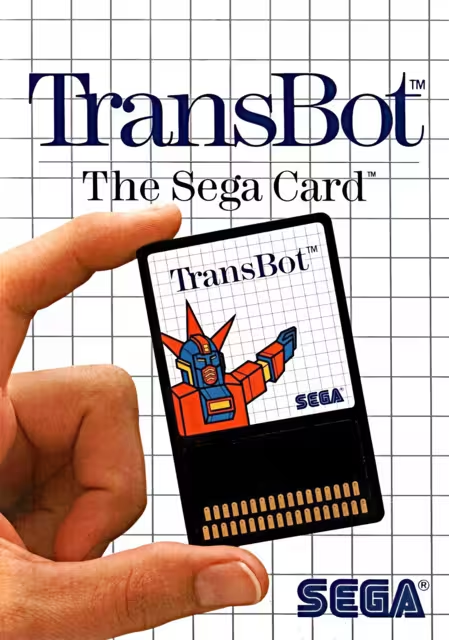
TransBot
4004
Video Game Collection
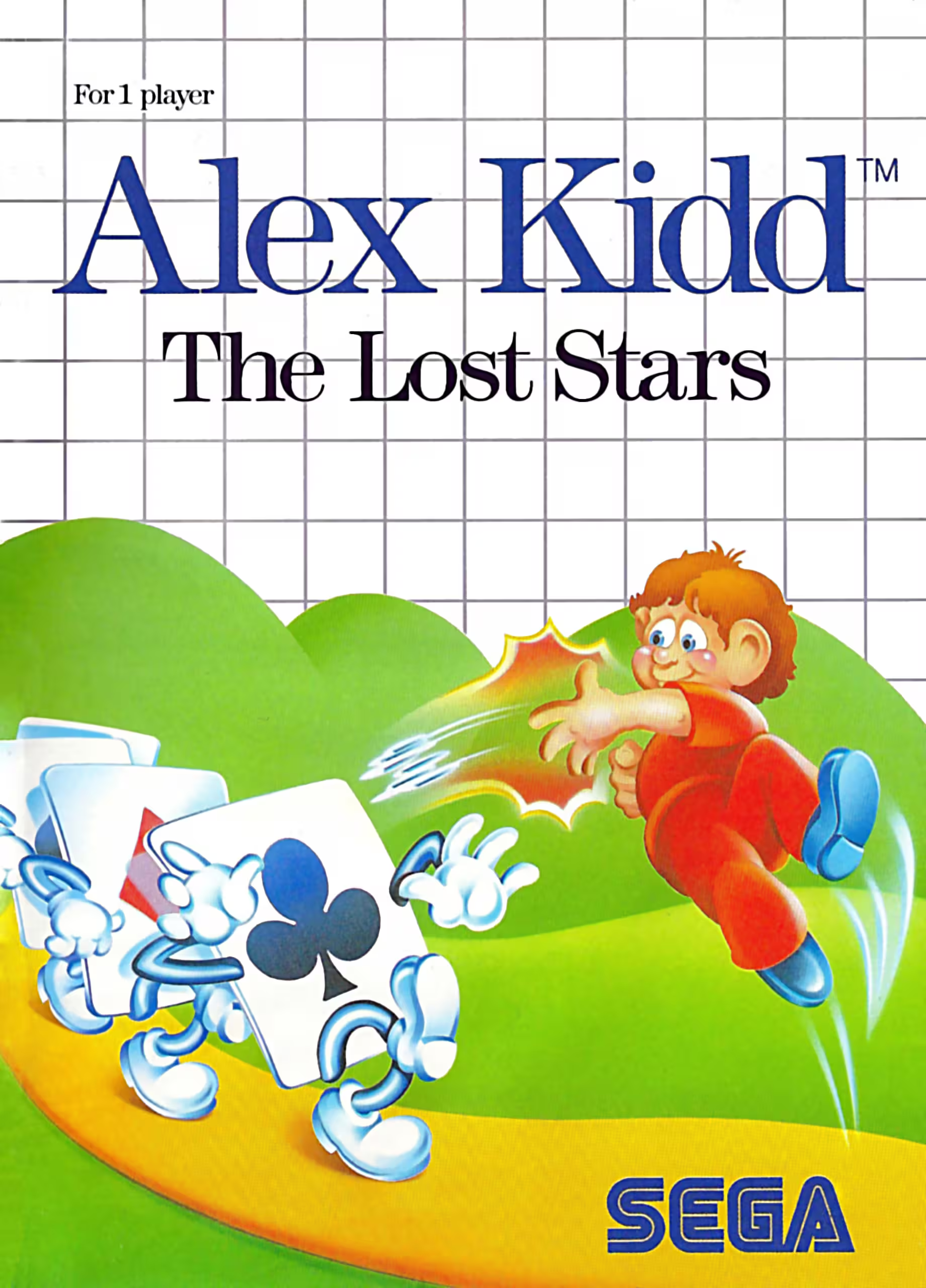
A frenetic platform game originally released in arcades before being ported to the Master System, remembered for completely abandoning the methodical mechanics of its predecessor in favour of a bizarre, fast-paced time-attack structure.
Alex Kidd: The Lost Stars is the narrative sequel to Miracle World. Following his victory over Janken the Great, Alex learns from an ancient wizard named Daleda that the twelve stars of the Aries constellation have been stolen from the sky. This was the work of Ziggurat, a mysterious evil entity who attempted the same theft 5,000 years prior before being defeated by Alex’s ancestor, Halifax Kidd. To restore the sky, Alex must traverse a series of eccentric environments ranging from a murderous Toy Realm to the bizarre World of Make Believe, to recover the Miracle Balls and stop Ziggurat once and for all.
The gameplay marks a radical departure from the first installment. Instead of punching blocks, spending currency, or engaging in games of rock-paper-scissors, Alex relies primarily on precise jumping and evasion. His health is tied directly to a constantly depleting time meter; taking damage or falling into pits does not kill him instantly, but instead subtracts precious seconds and forces him back to a checkpoint. Throughout the six stages, players can collect power-up capsules that temporarily grant the ability to shoot projectiles or jump higher. Upon reaching the end of the sixth stage, the game tasks the player with running through a second, more difficult “loop” of all the levels with altered enemy placements to truly finish the campaign. While the arcade original featured a two-player co-op mode with a second character named Stella, the Master System port is strictly a single-player experience, though it compensates by offering infinite continues.
The game is widely considered one of the weirdest entries in Sega’s early catalogue, characterised by eccentric enemy designs such as a notorious punk enemy who fires skulls from his backside, in addition to Alex’s digitised shriek every time he takes damage. By stripping away the vehicles, shops, and deliberate exploration that defined Miracle World, The Lost Stars struggled to find the same level of critical or commercial reverence. However, retrospectively it is a fascinating artefact of late-80s franchise experimentation. It illustrates Sega’s willingness to drastically reinvent their flagship character across different hardware formats long before they codified their platforming identity with Sonic the Hedgehog.
| Item Name |
|
|---|---|
| Original Name |
|
| Item Code |
|
| Item Number |
|
| Type | |
| Genre | |
| Theme | |
| Region | |
| Territory | |
| Packaging | |
| Documentation | |
| Developer | |
| Publisher | |
| Distributor | |
| Media | |
| Players | |
| Release Date | |
| Date Added |
|