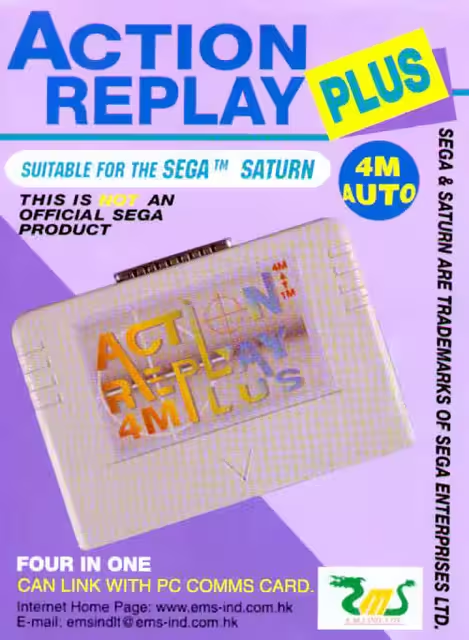
Action Replay 4M Plus
EMS-9602
Video Game Collection
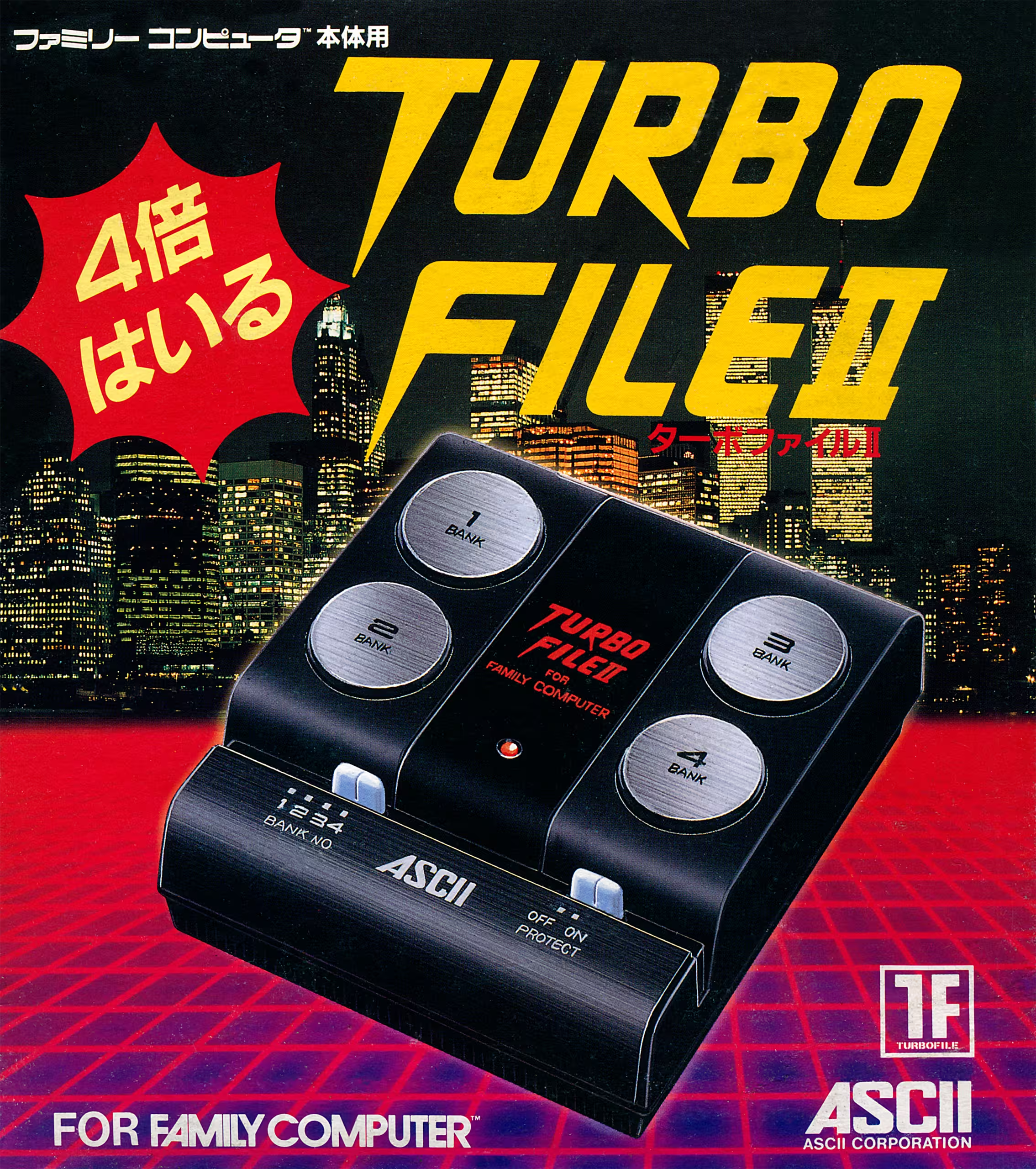
A specialised external memory management peripheral built for the Famicom, designed to bypass the limitations of on-cartridge battery backups and provide long-term data security for complex titles. Its a pioneer of external console storage, offering a robust, multi-bank solution for the Famicom’s most data-heavy software.
The Turbo File II is the successor to ASCII’s original Turbo File, serving as an external SRAM bank for players who needed more save capacity than a standard cartridge could provide. In an era before memory cards became common, these acted as a proprietary storage system for the Famicom. Improving on the first model, which offered a fixed 8KB of SRAM, the “II” revision significantly expanded storage to 32KB, organised into four distinct 8KB banks. It was developed to serve the Japanese market’s growing demand for deep simulation and role-playing games, where the ability to maintain multiple save states or transfer data between sequels was a major selling point. The device is a distinct, wedge-shaped peripheral that connects directly to the Famicom’s 15-pin expansion port (DA-15) located on the front of the original console or the side of the Sharp Twin Famicom.
The device operates using internal battery-backed SRAM, powered by two AA batteries. It features a physical four-position sliding switch on the front panel, allowing players to manually toggle between memory banks labelled A, B, C, and D. This mechanical bank-switching provided a tactile solution to data management, effectively allowing a single device to act as four separate memory cards. Additionally, the Turbo File II includes a Write Protect switch to prevent accidental data loss and a proprietary “Data ROM” slot on the top, which was used for specialised expansion packs that added functionality to specific games, such as adding new horse data to Derby Stallion.
The Turbo File II was the backbone for ASCII’s infrastructure games and several prominent third-party titles. Its most famous application was in the Wizardry series, where it allowed players to migrate their carefully levelled party data from Wizardry I through to Wizardry III. Other notable supported titles included:
The Turbo File II was a Famicom-bound piece of engineering, reliant on the 15-pin expansion port that was omitted from the Western NES. Later support was brought to the Super Famicom with the Turbo File Adapter. This saw a number of Super Famicom games supporting it, including Ardy Lightfoot, the Derby Stallion series, Tactics Ogre, and Wizardry V. Most later SFC titles however required the Turbo File Twin that was specific to the console with even more memory and newer transfer mode.
| Item Name |
|
|---|---|
| Original Name |
|
| Item Code |
|
| Item Number |
|
| Type | |
| Class | |
| Region | |
| Territory | |
| Packaging | |
| Documentation | |
| Developer | |
| Manufacturer | |
| Launch Price |
|
| Release Date | |
| Date Added |
|