
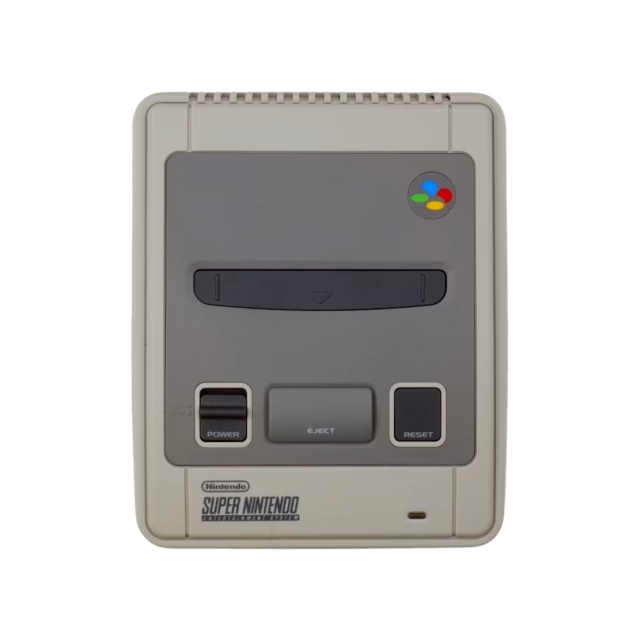
Super Nintendo Classic Mini Control Deck
CLV-301
Video Game Collection

A 64‑bit home video game console released by Nintendo in 1996, powered by a MIPS‑based CPU and SGI‑designed graphics chip, notable for pioneering 3D gameplay, four‑player support, and its distinctive cartridge‑based library.
At its core, the Nintendo 64 was powered by a NEC VR4300 processor, a MIPS R4300i‑based 64‑bit RISC CPU running at 93.75 MHz. This was paired with the SGI‑designed Reality Coprocessor (RCP), clocked at 62.5 MHz, which handled both graphics and audio. The RCP itself was divided into two units: the Reality Signal Processor (RSP), responsible for geometry transformations and audio processing, and the Reality Display Processor (RDP), which managed rasterisation, pixel operations, and advanced effects. Together, they enabled features such as Z‑buffering, anti‑aliasing, trilinear MIP‑mapping, environment mapping, and perspective‑correct texture rendering — capabilities that set the console apart from its contemporaries.
The system shipped with 4 MB of Rambus RDRAM, expandable to 8 MB via the Expansion Pak. Games were distributed on ROM cartridges, which offered fast load times but limited storage compared to the CD‑ROMs used by competitors. Nintendo also experimented with the 64DD, a magnetic disk add‑on released only in Japan, which supported rewritable media and online connectivity through the Randnet service, though it was a commercial failure.
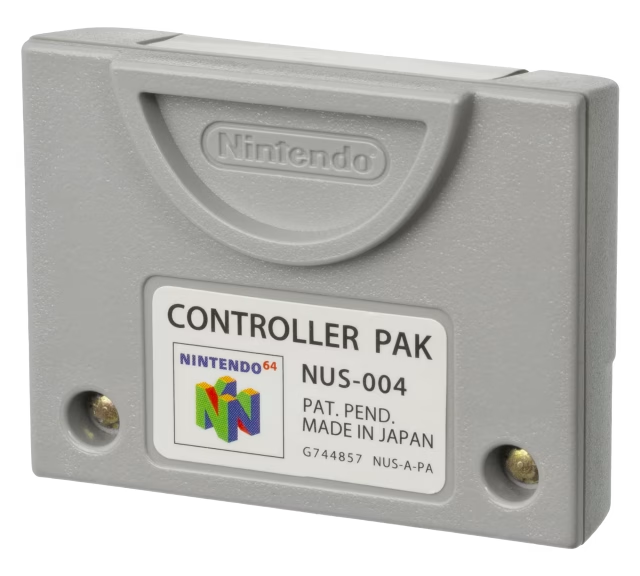
Audio output was 16‑bit stereo at 44.1 kHz, with some titles supporting Dolby Pro Logic surround sound. Video resolutions ranged from 256×224 up to 640×480, with a 21‑bit colour palette. The console featured four built‑in controller ports, encouraging local multiplayer as a defining part of its identity. Accessories such as the Controller Pak (a 32 KB memory card), Rumble Pak, and Transfer Pak further extended functionality.
| Item Name |
|
|---|---|
| Original Name |
|
| Item Code |
|
| Type | |
| Class | |
| Region | |
| Territory | |
| Developer | |
| Manufacturer | |
| Launch Price |
|
| Release Date | |
| Date Added |
|