FIFA 18
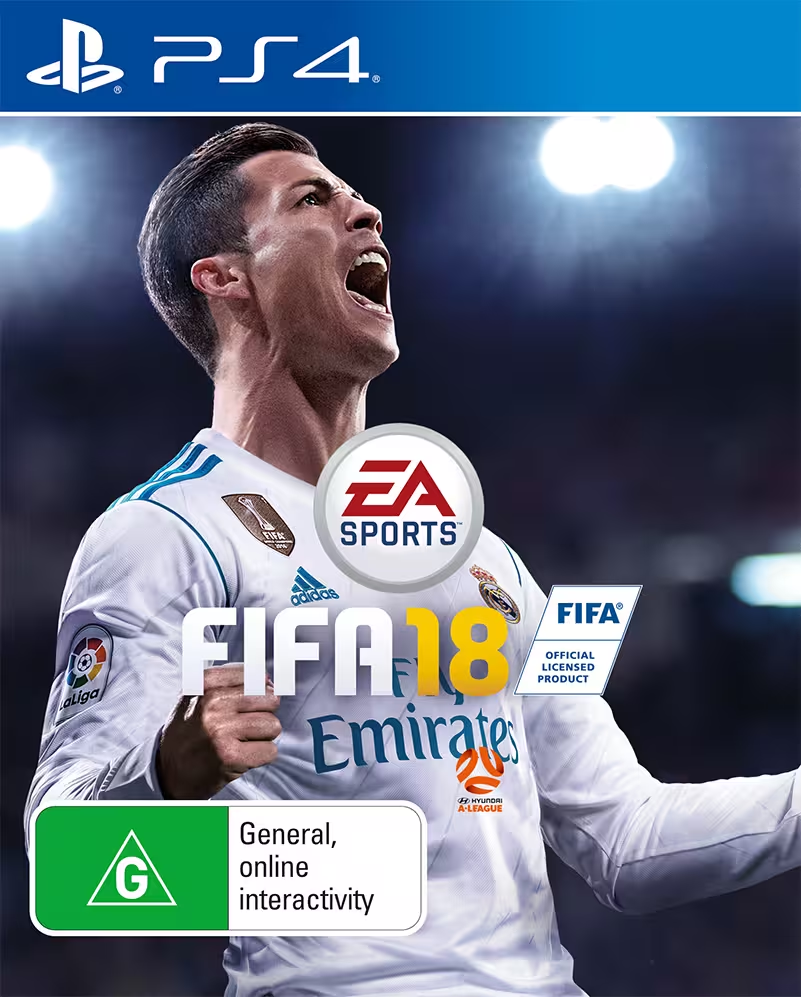
A football simulation that emphasised realism through the Frostbite engine, remembered for its Real Player Motion Technology, expanded Premier League presentation, and new Ultimate Team modes, while marking the end of significant support for legacy consoles.
Description
FIFA 18 is the 25th entry in the series, launch in late 2017. It built on the shift to Frostbite in FIFA 17 by introducing Real Player Motion Technology, delivering more fluid animations, distinct player locomotion, and heightened responsiveness. This meant star athletes exhibited recognisable movement styles and first‑touch behaviours that brought broadcast‑like authenticity to moment‑to‑moment play. Presentation advanced with a more complete Premier League package and sharper broadcast overlays, alongside broader stadium authenticity and improved crowd atmosphere.
Gameplay refinements focused on fluidity and individuality. Dribbling was tuned to feel less rigid, crossing mechanics were broadened to include more viable delivery types, and player physics aligned more consistently with animations for cleaner collisions. The Journey returned as Hunter Returns, continuing Alex Hunter’s narrative with branching paths, international opportunities, and cameos from football icons. Career Mode added interactive transfer negotiations via cutscenes, aiming to make contract and fee discussions more lifelike.
Ultimate Team, the series’ most popular mode, introduced Squad Battles, an offline competitive playlist against community‑created squads with weekly rewards, opening high‑end progression to players who preferred single‑player. Legends were rebranded as Icons and became available across platforms, enabling squads with Pelé, Maradona, and Ronaldinho beyond Xbox for the first time. Seasonal events and SBCs deepened the mode’s cadence, while chemistry and formation meta continued to shape competitive play.
Legacy platforms saw winding‑down support. PlayStation 3 and Xbox 360 received a Legacy Edition that largely retained FIFA 17’s gameplay while updating kits and rosters, signalling the close of meaningful development on those consoles. Nintendo Switch got a custom version without The Journey but with portable Ultimate Team, reflecting EA’s experimentation with hardware‑specific builds.
Reception was broadly positive. Critics and players praised the animation overhaul, stadium atmosphere, and expanded single‑player options, while noting balance concerns around defending, pace, and crossing that shaped the early online meta. Commercially, the game was a major success, extending FIFA’s lead over Pro Evolution Soccer. It consolidated Frostbite as the technical foundation, broadened Ultimate Team with accessible progression and universally available Icons, and effectively ended the franchise’s substantive presence on prior‑generation hardware.
Datasheet
| Item Name |
|
|---|---|
| Item Code |
|
| Item Number |
|
| Series | |
| Type | |
| Genre | |
| Characteristics | |
| Territory | |
| Packaging | |
| Documentation | |
| Developer | |
| Publisher | |
| Media | |
| Players | |
| Peripherals | |
| Video Modes | |
| Sound Modes | |
| Middleware | |
| Classification | |
| Release Date | |
| Date Added |
|
Related Products
-
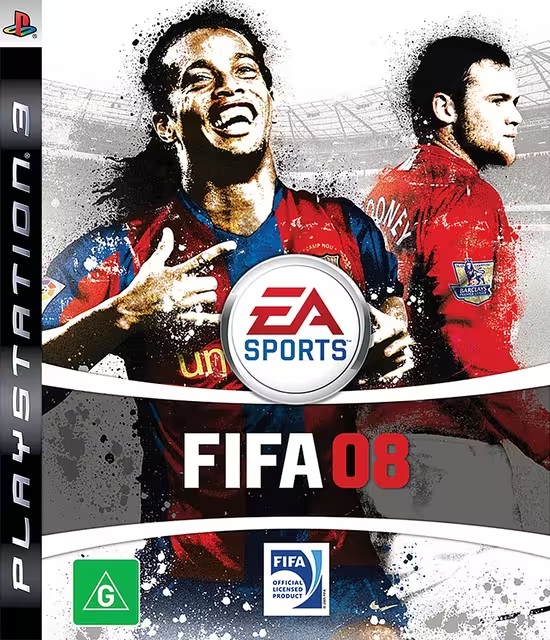 FIFA 08BLES-00132
 -
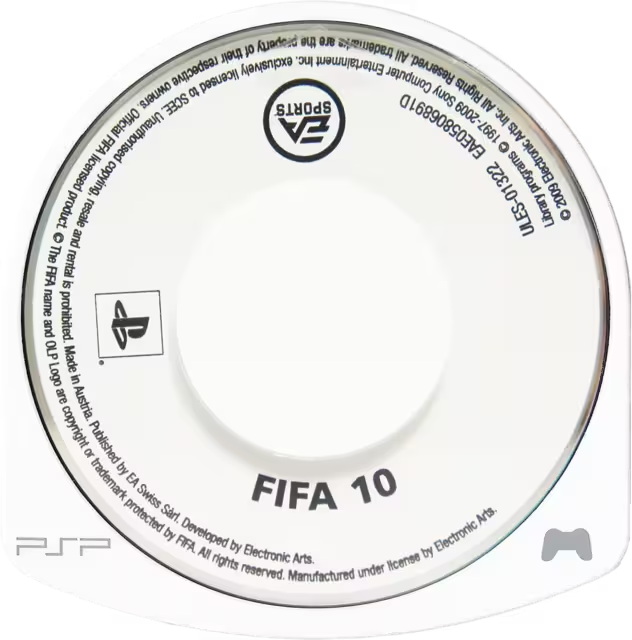 FIFA 10ULES-01322
 -
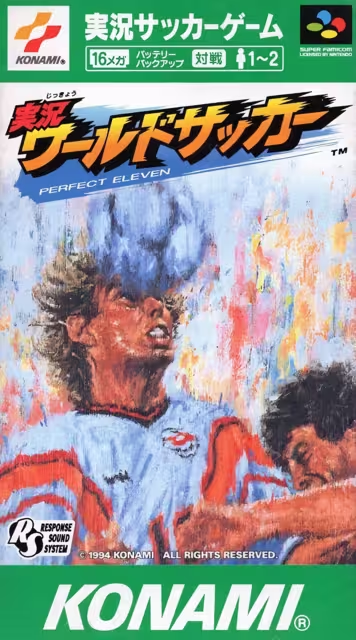 Jikkyō World Soccer: Perfect ElevenSHVC-3U
 -
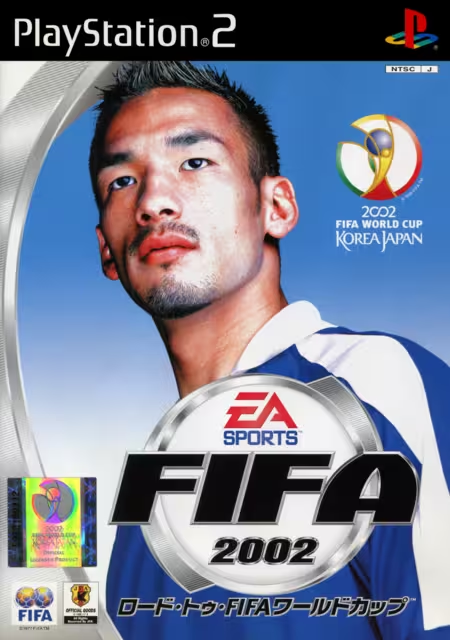 FIFA 2002: Road to FIFA World CupSLPS-25069
 -
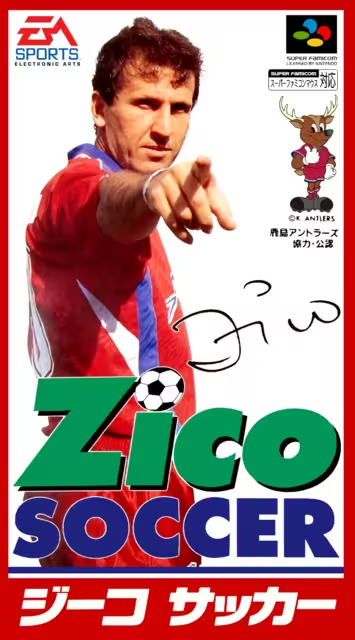 Zico SoccerSHVC-ZD
 -
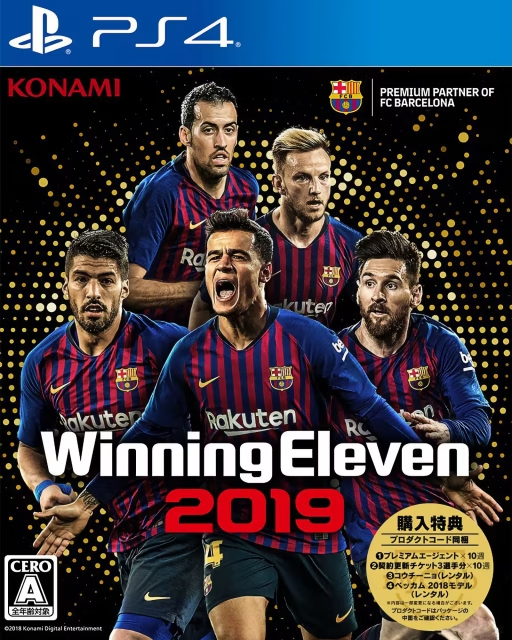 World Soccer Winning Eleven 2019PLJM-16166, VF025-J1
 -
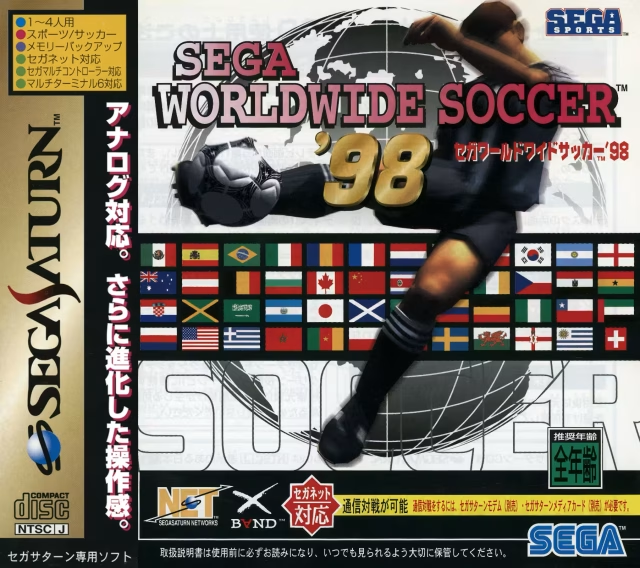 Sega Worldwide Soccer '98GS-9187
 -
 World Soccer Winning Eleven 2017 (Konami the Best)PLJM-80255, VF018-J2