Chromagi

Video Game Collection

×
Collection
Nintendo
Switch 2
Switch
Nintendo 3DS
Wii U
Wii
Nintendo DS
GameCube
Game Boy Advance
Nintendo 64
Super Famicom / Super NES
Game Boy
Famicom / NES
Sega
Dreamcast
Saturn
Mega Drive
32X
Mega CD
Mark III / Master System
Sony
PlayStation 5
PlayStation 4
PlayStation Vita
PlayStation 3
PlayStation Portable
PlayStation 2
PlayStation
Microsoft
Xbox Series X|S
Xbox One
Xbox 360
Xbox
Windows Classic
Bandai
WonderSwan
Generation Timeline
Company Index
Articles
About the Site
Light Theme
Dark Theme
Language
English
日本語
Deutsch
Español
Français
Polski
Italiano
Português
Nederlands
Svenska
Magyar
العربية‎
Suomen
Русский
हिन्दी
Tagalog
Bahasa Indonesia
Bahasa Melayu
Tiếng Việt
한국어
简体中文
繁體中文
ไทย
Login
Contact Form
Privacy Policy
Home
NintendoNintendo 64
Nintendo All-Star! Dairantō Smash Brothers [NUS-NALJ-JPN]

Nintendo All-Star! Dairantō Smash Brothers

ニンテンドウオールスター! 大だい乱らん闘とうスマッシュブラザーズ
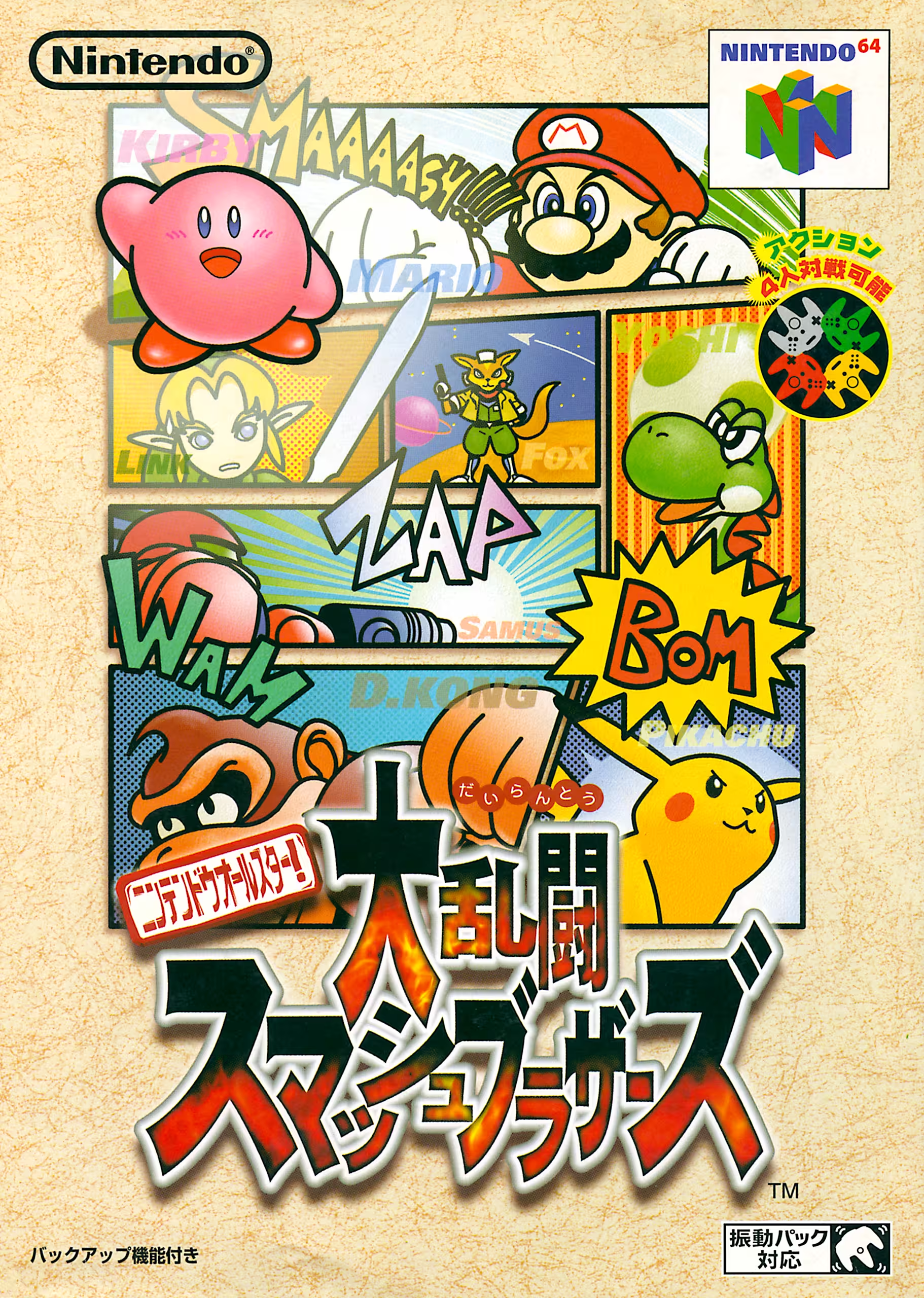
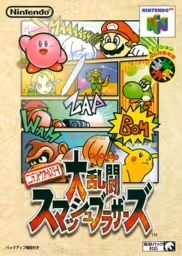
An image of Nintendo All-Star! Dairantou Smash Brothers - Box Front.
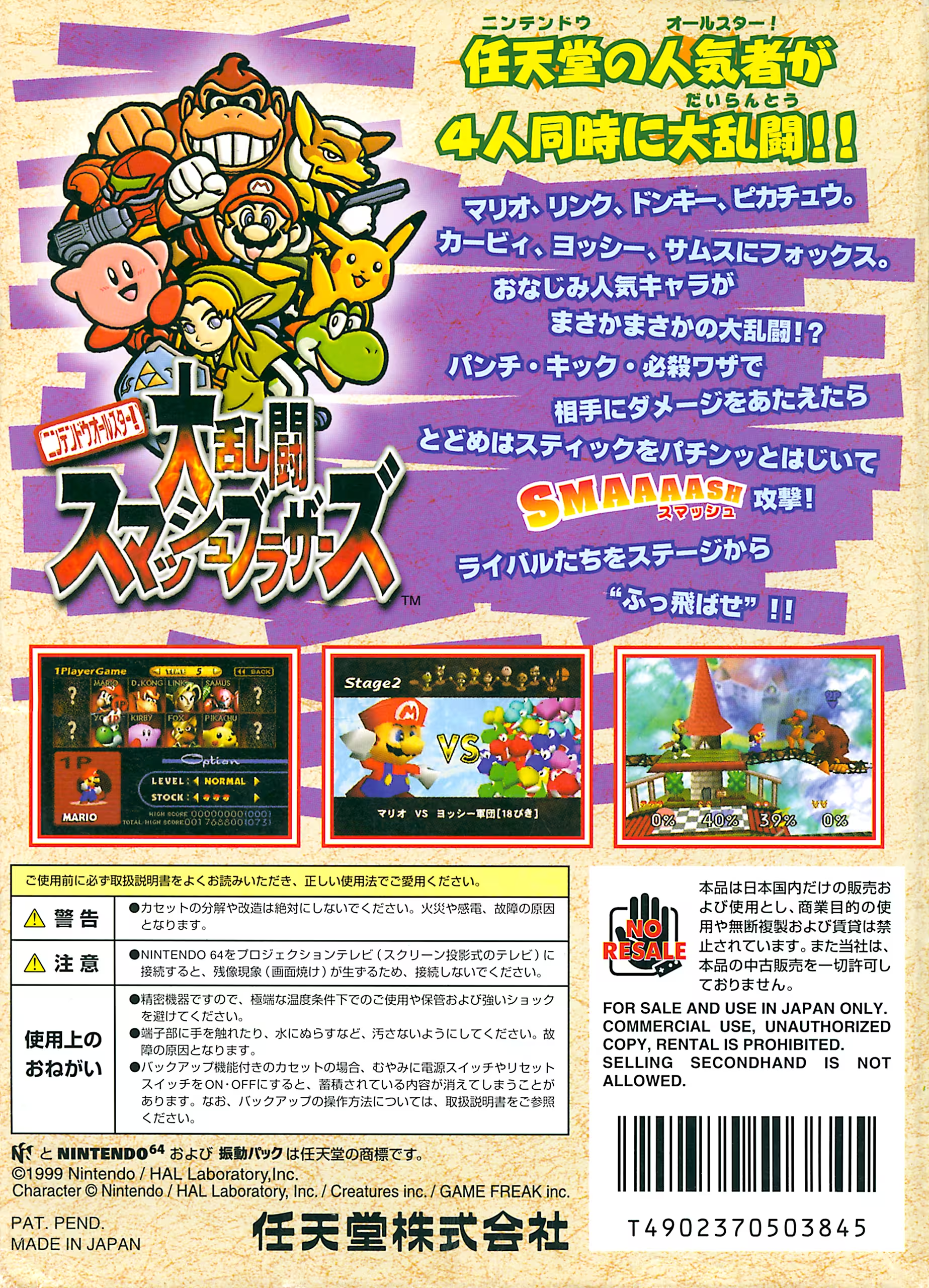
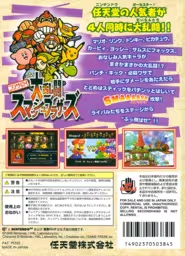
An image of Nintendo All-Star! Dairantou Smash Brothers - Box Back.
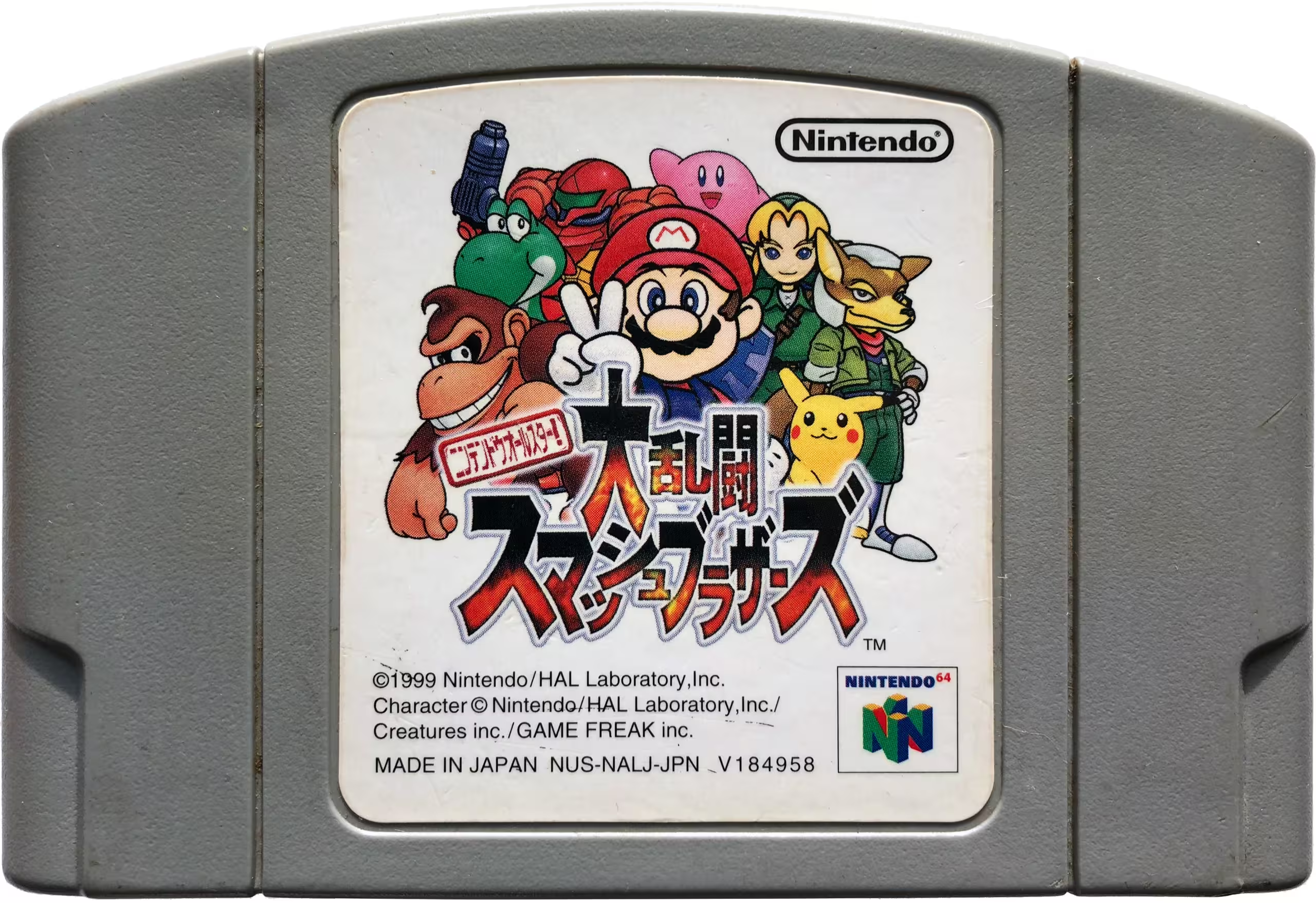
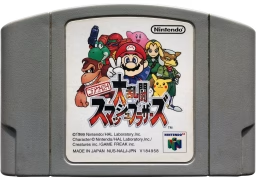
An image of Nintendo All-Star Dairantou Smash Brothers - Game Cartridge.
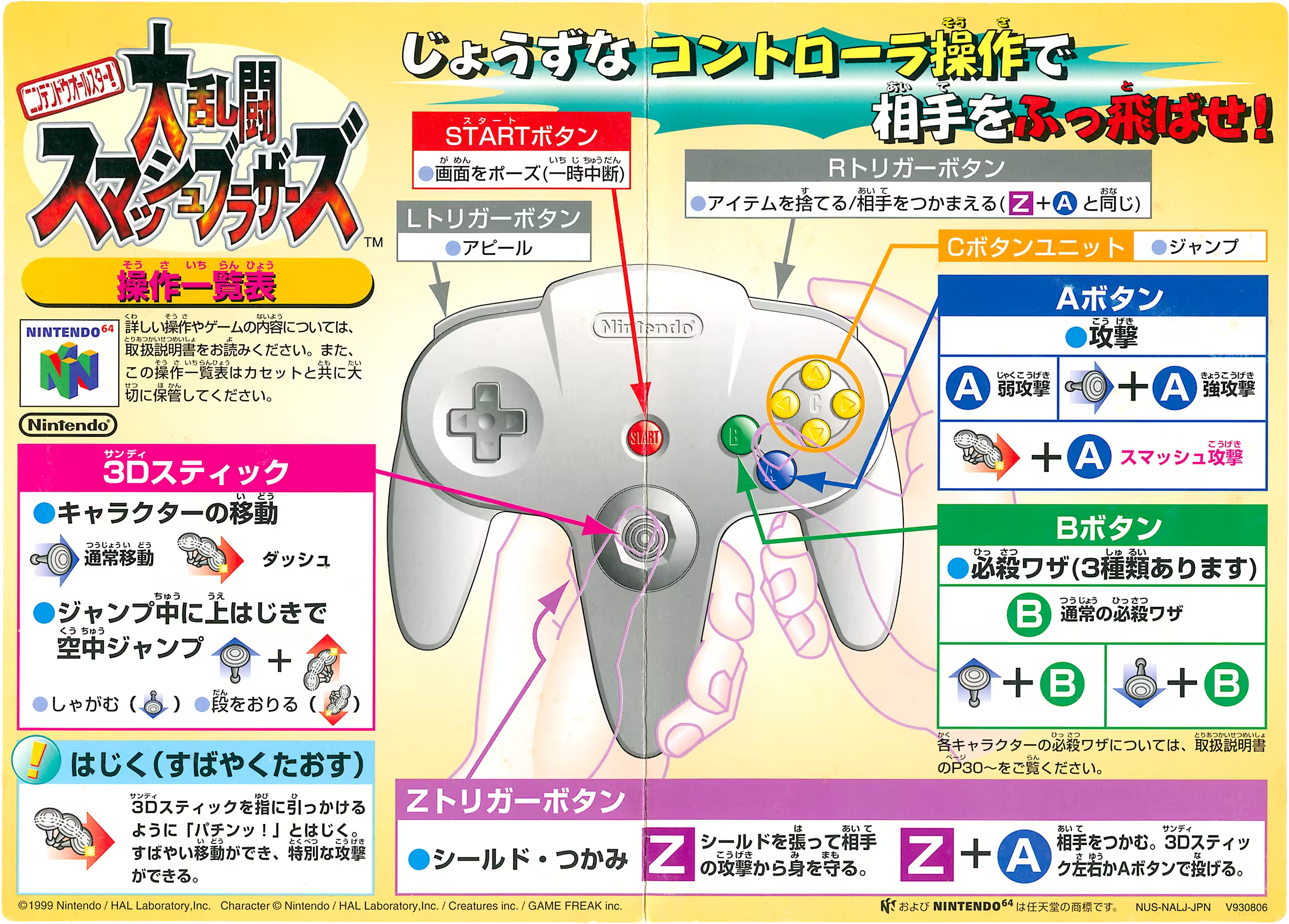
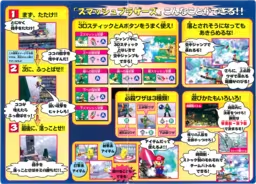
An image of Nintendo All-Star! Dairantou Smash Brothers - Guide Card Back.
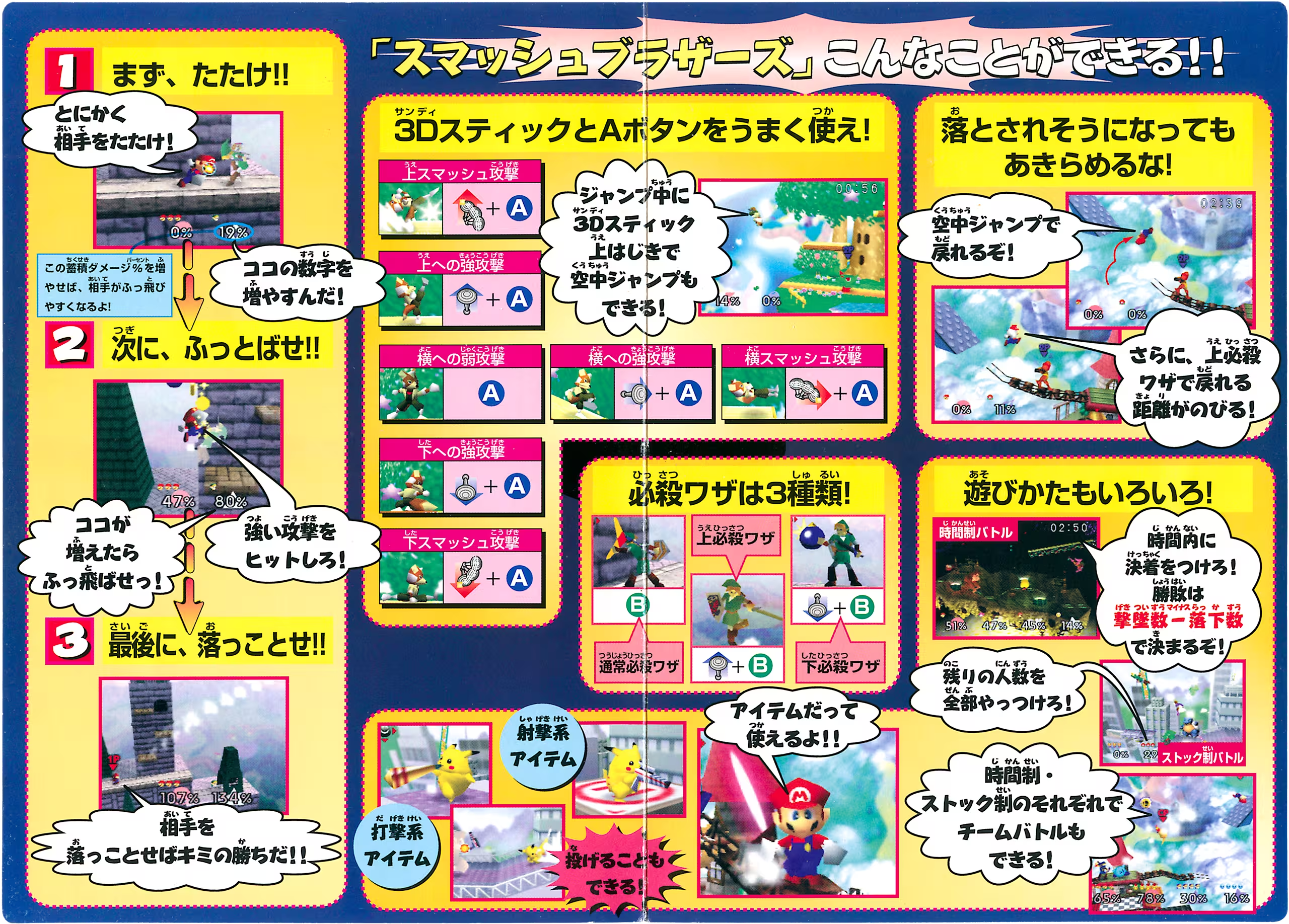
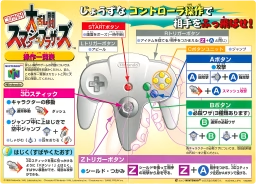
An image of Nintendo All-Star! Dairantou Smash Brothers - Guide Card Front.
  1. An image of Nintendo All-Star! Dairantou Smash Brothers - Box Front. Box Front
  2. An image of Nintendo All-Star! Dairantou Smash Brothers - Box Back. Box Back
  3. An image of Nintendo All-Star Dairantou Smash Brothers - Game Cartridge. Game Cartridge
  4. An image of Nintendo All-Star! Dairantou Smash Brothers - Guide Card Back. Guide Card Back
  5. An image of Nintendo All-Star! Dairantou Smash Brothers - Guide Card Front. Guide Card Front

A crossover fighting game designed to merge characters from multiple Nintendo franchises into a single competitive format, introducing a new approach to party play on home consoles.

Description

Nintendo All-Star! Dairantou Smash Brothers, known internationally as “Super Smash Bros.”, presents battles between iconic characters such as Mario, Link, Pikachu, and Kirby across interactive stages themed on their respective series. It employs a percentage-based damage system where attacks increase knockback potential, replacing traditional health bars with a mechanic that rewards positioning and timing. Visuals use polygonal models and simple textures, reflecting the Nintendo 64’s early 3D capabilities while maintaining clarity for fast-paced multiplayer.

Gameplay introduces a unique system: instead of health bars, fighters accumulate percentage-based damage, which increases knockback when hit. Victory comes by launching opponents off the stage rather than depleting health, creating dynamic matches where positioning and recovery are critical. Stages feature interactive elements and hazards, and items such as Poké Balls and hammers add unpredictability. The roster includes twelve characters from major Nintendo franchises, each with distinct move sets and special attacks. Multiplayer supports up to four players locally, reinforcing its identity as a party game rather than a traditional one-on-one fighter.

The game originated as a prototype at HAL Laboratory under Masahiro Sakurai, initially conceived as a small-scale fighting game called Dragon King: The Fighting Game. The concept evolved into a crossover when Sakurai proposed using Nintendo characters to differentiate it from traditional fighters. Development emphasised accessibility, with simple controls and mechanics that allowed newcomers to enjoy the game while retaining depth for skilled players.

The title was immediately praised for its originality and accessibility, quickly becoming a multiplayer staple. Japanese gaming magazines highlighted its unique concept of bringing together characters from multiple Nintendo franchises, something rarely seen at the time. Commercially, the game was one of the best-selling N64 titles. Retrospectively it was a foundational work that established mechanics that would shape one of Nintendo’s most enduring franchises. Its sequel particularly would really solidify the formula, having a significant cultural impact in redefining competitive esports fighting games.

Datasheet

Item Name
  • Nintendo All-Star! Dairantō Smash Brothers
Original Name
  • ニンテンドウオールスター! 大乱闘スマッシュブラザーズ
Item Code
  • NUS-NALJ-JPN
Item Number
  • 4902370503845
Series
  • Smash Bros.
Type
  • Software
Genre
  • Fighting
Region
  • NTSC-J
Territory
  • Japan
Packaging
  • Missing
Documentation
  • Missing
Developer
  • HAL Laboratory
Publisher
  • Nintendo
Media
  • 128 Mbit ROM
  • Cartridge
  • Media
    Identity
Players
  • 4
Peripherals
  • Haptic Feedback
Launch Price
  • JP¥5,800
Release Date
  • 21 January 1999
Date Added
  • 6 July 2018
External Links
  • Official Catalogue: nintendo.co.jp

Related Products

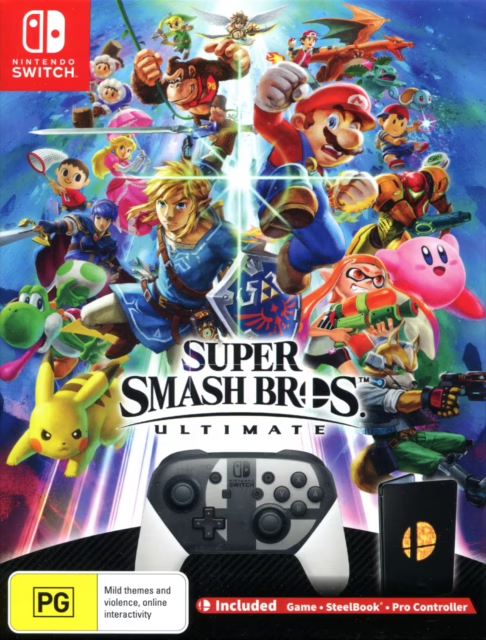
  • An image of Super Smash Bros. Ultimate - Front Cover.
    Super Smash Bros. Ultimate
    HAC-AAABA-AUS
  • An image of Zelda no Densetsu: Majora no Kamen - Box Front.
    Zelda no Densetsu: Majora no Kamen
    NUS-NZSJ-JPN
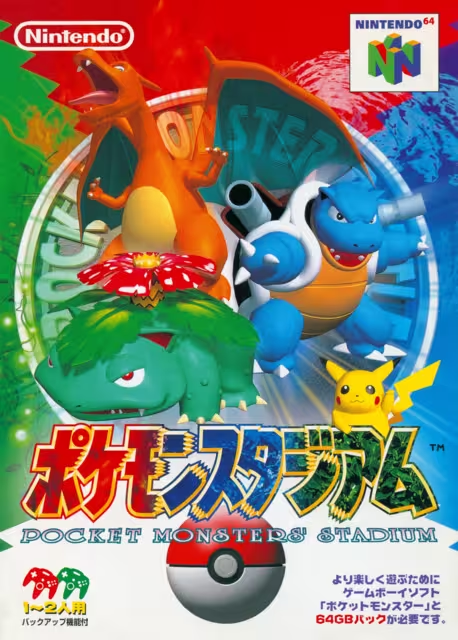
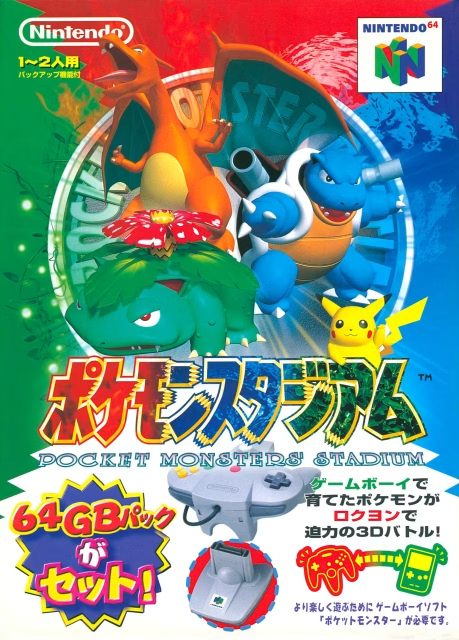
  • An image of Pocket Monster Stadium (64GB Pack Included Version) - Box Front.
    Pocket Monster Stadium (64GB Pack Included Version)
    NUS-R-CPSJ-JPN
  • An image of Banjo to Kazooie no Daibouken 2 - Game Cartridge.
    Banjo-Tooie
    NUS-NB7J-JPN
  • An image of Donkey Kong 64 - Box Front.
    Donkey Kong 64
    NUS-NDOJ-JPN
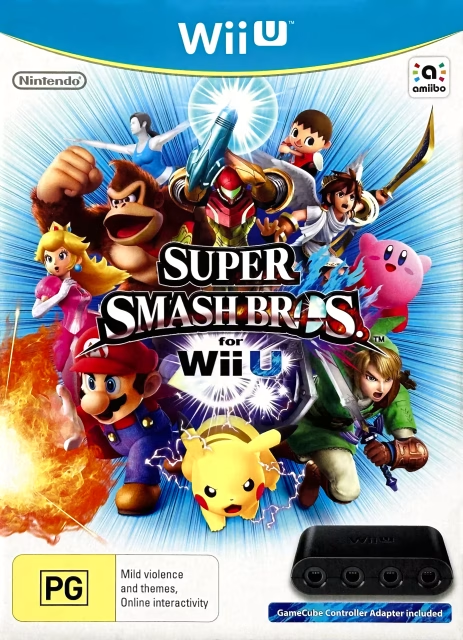
  • An image of Super Smash Bros. for Wii U - Front Cover.
    Super Smash Bros. for Wii U
    WUP-AXFP-AUS
  • An image of Super Smash Bros. Ultimate (Special Edition) - Box Front.
    Super Smash Bros. Ultimate (Special Edition)
    HAC-R-AAABA-AUS
  • An image of Zelda no Densetsu: Toki no Ocarina - Box Front.
    Zelda no Densetsu: Toki no Ocarina
    NUS-CZLJ-JPN

Collection

  • Home
  • Random Item
  • Generation Timeline

Site Information

  • ©1996 – 2026 Chromagi
  • About the Site
  • Disclaimer
  • Privacy Policy
  • Contact Form