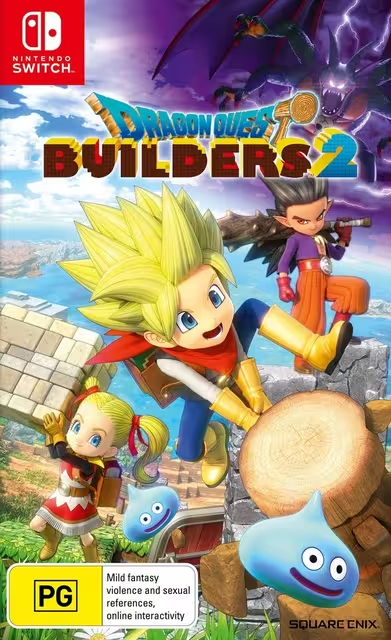
Dragon Quest Builders 2
HAC-AH97B-AUS
Video Game Collection

Currently have the EU/French version, although multi-lingual title. May switch for AU version.
Lost Sphear is the second title in Tokyo RPG Factory trilogy after I Am Setsuna, conceived as part of Square Enix’s initiative to recapture the spirit of classic 1990s JRPGs. The game features a world threatened by a mysterious phenomenon called “Lost,” in which entire towns, landscapes, and memories vanish into white nothingness. The protagonist, Kanata, discovers he has the ability to restore these lost areas by harnessing memories, and he embarks on a journey with his companions Lumina, Locke, and Van to rebuild the world and uncover the source of the crisis. This theme slightly reminds me of Enix’s Terranigma, but falls far short of its greatness. However, the memory‑restoration mechanic is central to both the narrative and gameplay, tying the story’s themes of identity and remembrance to the player’s progression.
Mechanically, Lost Sphear builds on the Active Time Battle system familiar from Square’s earlier RPGs, but it introduces a flexible positioning system that allows characters to move during combat to adjust attack ranges and exploit weaknesses. It also features “Vulcosuits,” mechanised armour that grants characters enhanced abilities and tactical options. The game’s art style is clean and minimalist, with an emphasis on nostalgic design cues that echo the Super Nintendo and PlayStation RPGs of the 1990s, though rendered in modern 3D.
Critics praised its polished combat and thematic ambition, but many noted that it felt derivative of earlier RPGs and lacked the emotional resonance of its inspirations. Certainly I noticed the connection to characters lacking. It would appeal primarily to fans of traditional JRPG design rather than a broad audience. Lost Sphear was part of Tokyo RPG Factory’s attempt to revive the “golden age” of JRPGs in a modern context. It features mechanics and narrative motifs that deliberately echo Chrono Trigger and Final Fantasy VI, but its reception highlights the difficulty of balancing homage with innovation. It would be followed by Oninaki to end the triology.
| Item Name |
|
|---|---|
| Original Name |
|
| Item Code |
|
| Item Number |
|
| Type | |
| Genre | |
| Territory | |
| Packaging | |
| Documentation | |
| Developer | |
| Publisher | |
| Media | |
| Players | |
| Peripherals | |
| Classification | |
| Release Date | |
| Date Added |
|