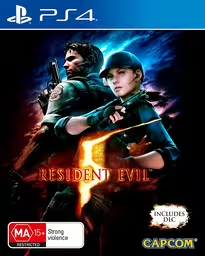
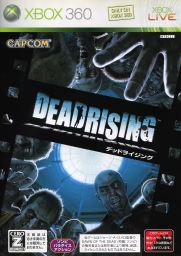
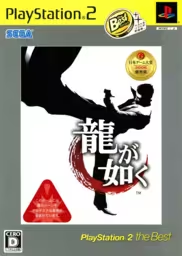
Grand Theft Auto III
グランド・セフト・オートIII

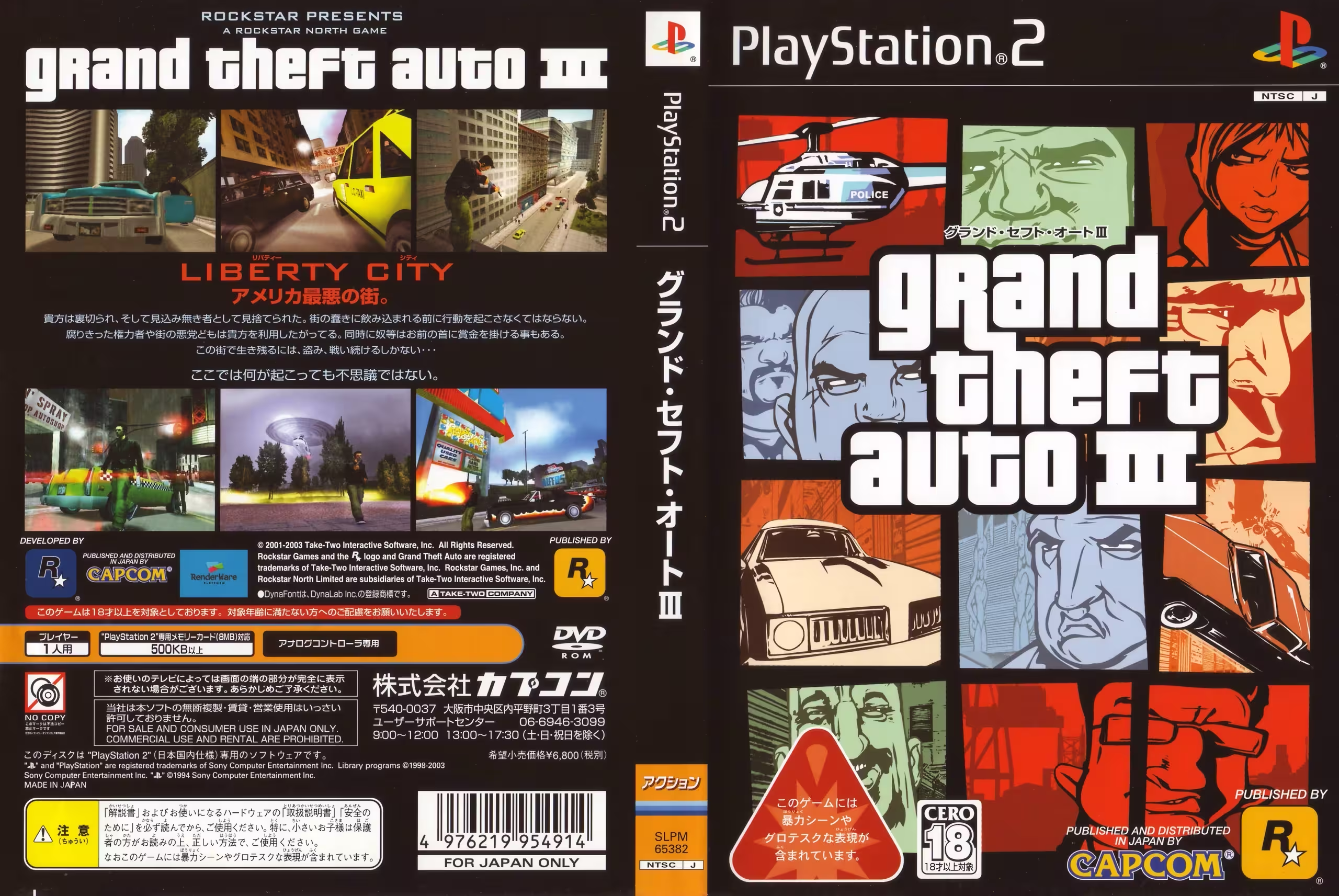
-
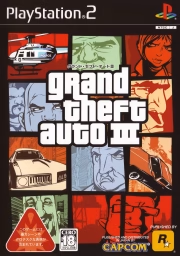 Front Cover
-
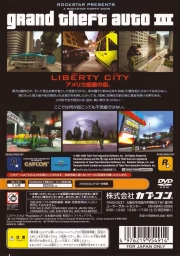 Back Cover
-
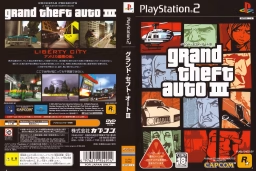 Full Cover
A landmark open-world experience that redefined urban simulation and interactive storytelling through its transition to fully three-dimensional environments. Represented a significant cultural shift in the Japanese gaming market, directly influencing the establishment of the modern age-rating system.
Description
Grand Theft Auto III follows a silent protagonist, Claude, who is betrayed during a high-stakes bank heist and left for dead. After escaping a prison transport, he descends into the criminal underworld of Liberty City, performing high-risk contracts for various mafia families, Yakuza factions, and corrupt officials. The story explores themes of loyalty, revenge, and the cyclical nature of crime in a decaying metropolis. The atmosphere is defined by its gritty, cinematic tone, inspired by iconic crime dramas and late-nineties urban aesthetics.
Players navigate a massive, interconnected city consisting of three distinct islands, utilising an array of vehicles and weapons to complete non-linear missions. This specific Japanese version, published by Capcom nearly two years after the international debut, features extensive localisation and content modifications to comply with regional regulations. Combat mechanics were significantly altered: head shots and decapitations were removed, and blood pools no longer appear beneath defeated characters. Furthermore, “ground attacks” (kicking fallen enemies) were disabled, and certain side missions were renamed e.g. references to “sugar” instead of narcotics and “dispatch” instead of prostitution. Despite these changes, the core gameplay loop of high-speed chases and sandbox exploration remained intact.
Critics at the time of its 2003 release praised the game for its unprecedented freedom and the technical achievement of its living, breathing city. The inclusion of Japanese text and a translated manual made the complex narrative accessible to a wider audience, though the censorship was a point of discussion for purists. This was quite reminiscent of American localisations of Japanese titles. The game was a major commercial success in Japan, selling approximately 290,000 copies within its first three months, a notable feat for a Western title at the time. Its arrival was so impactful that it is credited with ending the “rating-free” era of Japanese gaming, necessitating the creation of the CERO Z (18+) category to manage mature content. Today, it is remembered as the title that introduced the “sandbox” genre to the Japanese mainstream.
Datasheet
| Item Name |
|
|---|---|
| Localised Name |
|
| Item Code |
|
| Item Number |
|
| Series | |
| Type | |
| Genre | |
| Region | |
| Territory | |
| Packaging | |
| Documentation | |
| Developer | |
| Publisher | |
| Distributor | |
| Media | |
| Players | |
| Peripherals | |
| Video Modes | |
| Classification | |
| Launch Price |
|
| Release Date | |
| Date Added |
|