The Getaway
-
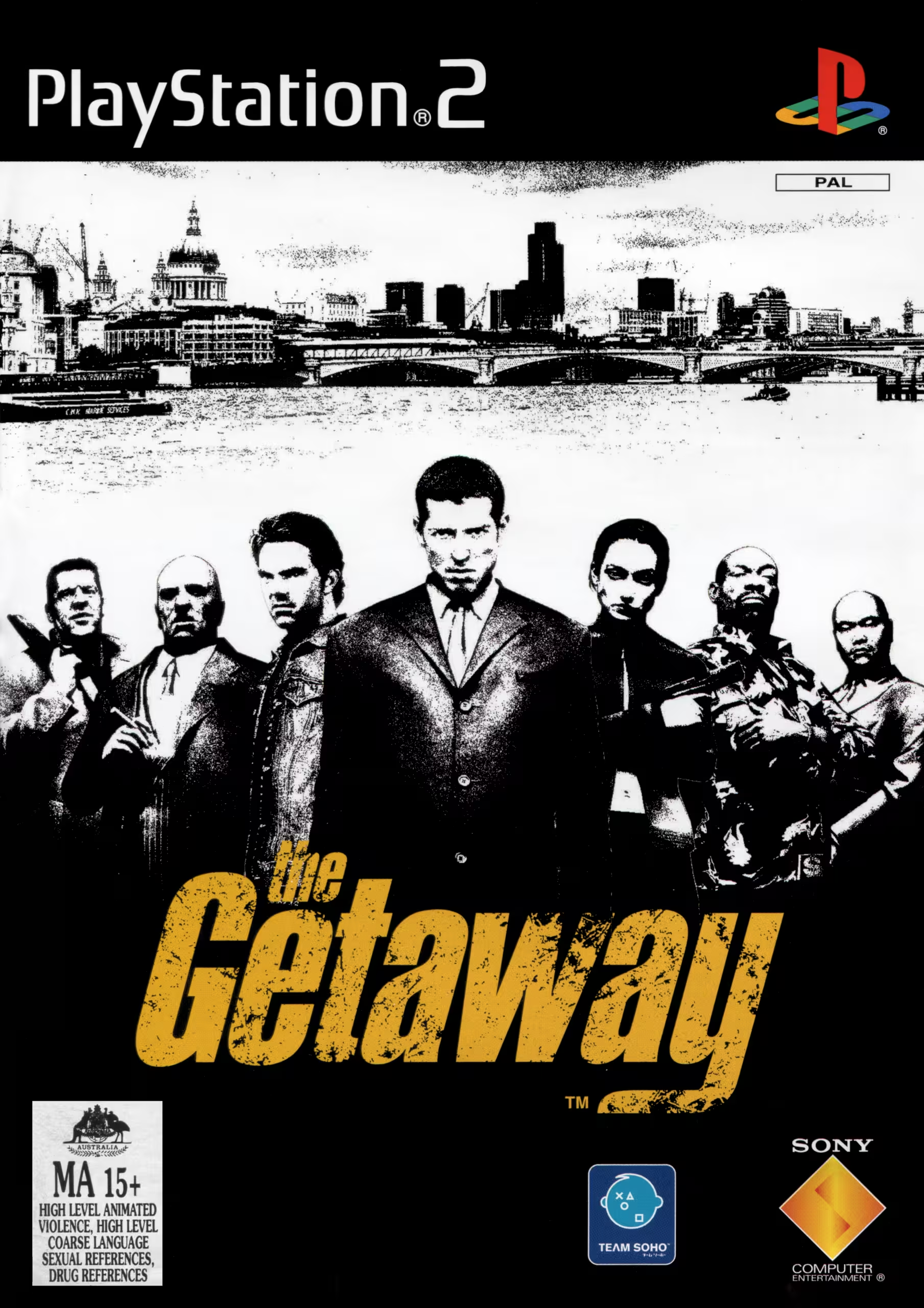
 Front Cover
-
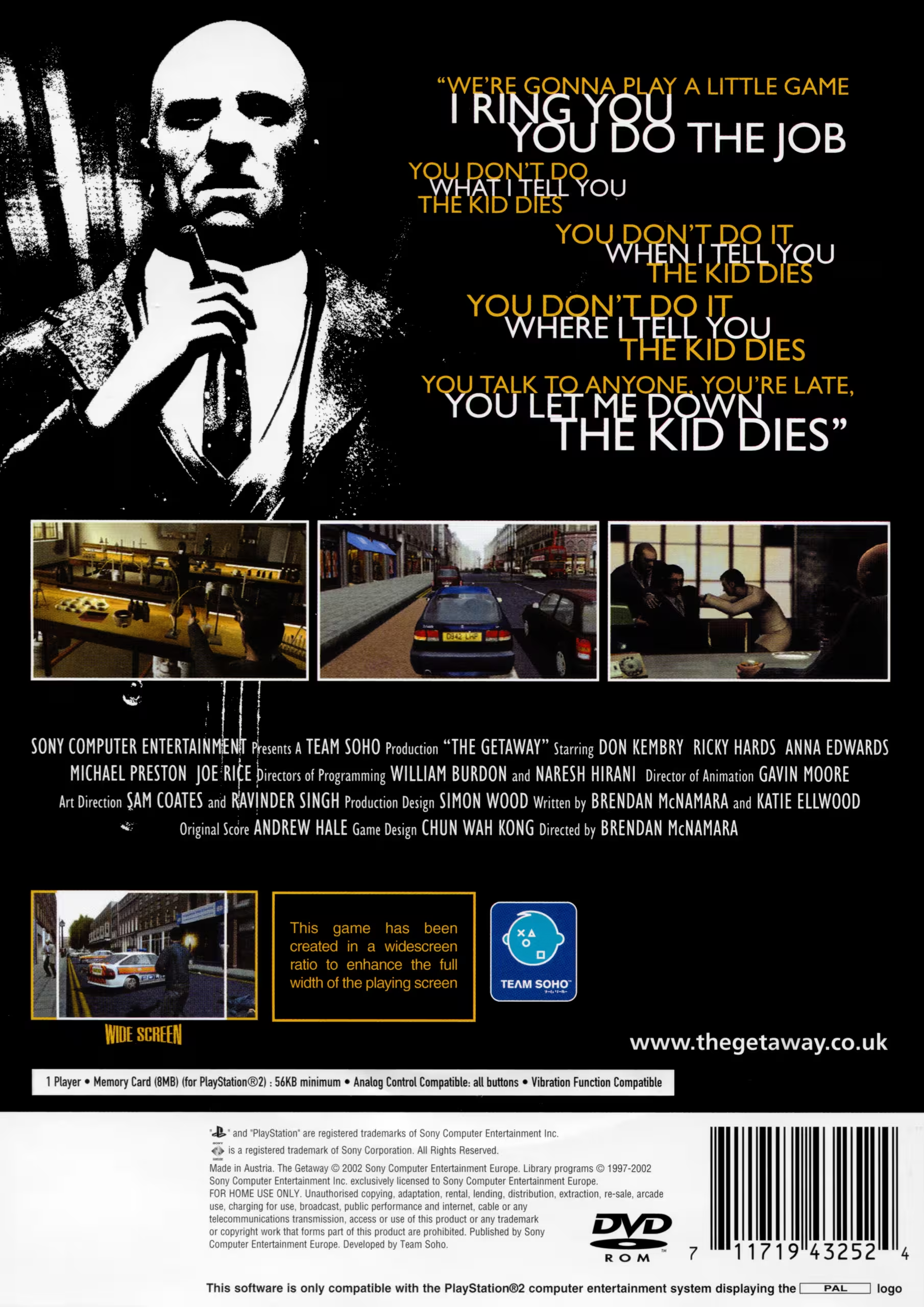
 Back Cover
A cinematic, open-world crime drama remembered for its photorealistic recreation of London, its uncompromising lack of a user interface, and for pushing the PlayStation 2’s streaming capabilities to their absolute limit.
Description
The Getaway saw Sony Computer Entertainment Europe attempt to create a playable gangster film, deliberately distancing itself from the arcade-style chaos of Grand Theft Auto in favour of gritty, East End realism. Developed by the internal London studio Team Soho and released in late 2002, the title captures the booming Cockney crime aesthetic popularised by films like Snatch and Get Carter. It reflects a design direction that prioritised narrative immersion over sandbox freedom. Originally intended as a PS2 launch title, it saw a massive two-year delay as the studio stubbornly committed to recreating 16 square kilometres of Central London with an unprecedented level of architectural accuracy.
The gameplay experience is built around a dual narrative, splitting the campaign between Mark Hammond, a framed ex-con forced to do the bidding of crime boss Charlie Jolson, and Frank Carter, a vigilante detective with the Flying Squad. A defining feature of the game is its complete lack of an on-screen HUD (Heads-Up Display): there are no health bars, ammo counters, or mini-maps. Instead, players are guided to their destinations by the flashing indicator lights (blinkers) of their vehicles. Health is visually represented by the character limping or bleeding onto their clothes, and recovery requires the player to literally lean against a wall to catch their breath. Unlike Grand Theft Auto III, the vehicles in The Getaway are fully licensed, with real-world models from Lexus, Nissan, and Vauxhall, and feature a punishingly realistic damage and physics model.
On a technical level, the game was defined by the creation of a bespoke engine capable of constantly streaming 3D geometry and high-resolution textures directly from the DVD, allowing players to drive across the entire 16-square-kilometre map without a single loading screen, a revolutionary feat in 2002. Another achievement was the pioneering use of full face, body, and voice motion-capture for multiple actors simultaneously, lending a theatrical weight to the cutscenes. However, the ambition of the engine came at the cost of the actual controls, which were widely criticised for being stiff, unresponsive, and plagued by a stubborn camera. Another issue involved real-world licensing backlash; early PAL pressings featured a British Telecom (BT) van that Hammond had to hijack to assassinate a corrupt cop. BT threatened legal action fearing it would incite violence against their engineers, forcing Sony to stealthily replace it with a generic white Ford Transit in all subsequent print runs.
Upon release, The Getaway received a highly polarised reception, heavily praised for its aesthetic ambition but battered for its clunky execution. Magazine reviewers lauded the phenomenal voice acting, the mature script, and the staggering accuracy of the London streets, though they frequently noted that the brutal time limits and clunky cover-shooting made the game a chore to actually play. Reception was incredibly strong in Europe and Australia, moving millions of units despite its flaws. Retrospectively, it is viewed as a wildly ambitious, flawed masterpiece that paved the way for the cinematic heavy-hitters of later generations, with director Brendan McNamara eventually carrying this same design philosophy into L.A. Noire.
Datasheet
| Item Name |
|
|---|---|
| Item Code |
|
| Item Number |
|
| Type | |
| Genre | |
| Region | |
| Territory | |
| Packaging | |
| Documentation | |
| Developer | |
| Publisher | |
| Distributor | |
| Media | |
| Players | |
| Video Modes | |
| Sound Modes | |
| Classification | |
| Release Date | |
| Date Added |
|
Related Products
-
 Hardware: Online ArenaSCES-51977
 -
 Spyro: Enter the Dragonfly (Platinum)SLES-51043-P-ANZ
 -
 Devil May Cry 2SLES-82011~SLES-82012
 -
 Sonic Heroes (Platinum)SLES-51950-ANZ-P, INL-P51950-PL-AU
 -
 Shin Sangoku Musou 2 & Shin Sangoku Musou 2 Mushouden (KOEI Mega Pack)SLPM-65263~4
 -
 LemmingsSLES-54145
 -
 LEGO Indiana Jones: The Original AdventuresSLES-55133
 -
 Family Guy Video Game!SLES-54126